#Bf109 #bf109f #bf109f4 #historical #messerschmitt_bf_109 #messerschmitt_bf109 #german_aces
#Bf109 #bf109f #bf109f4 #historical #messerschmitt_bf_109 #messerschmitt_bf109 #german_aces
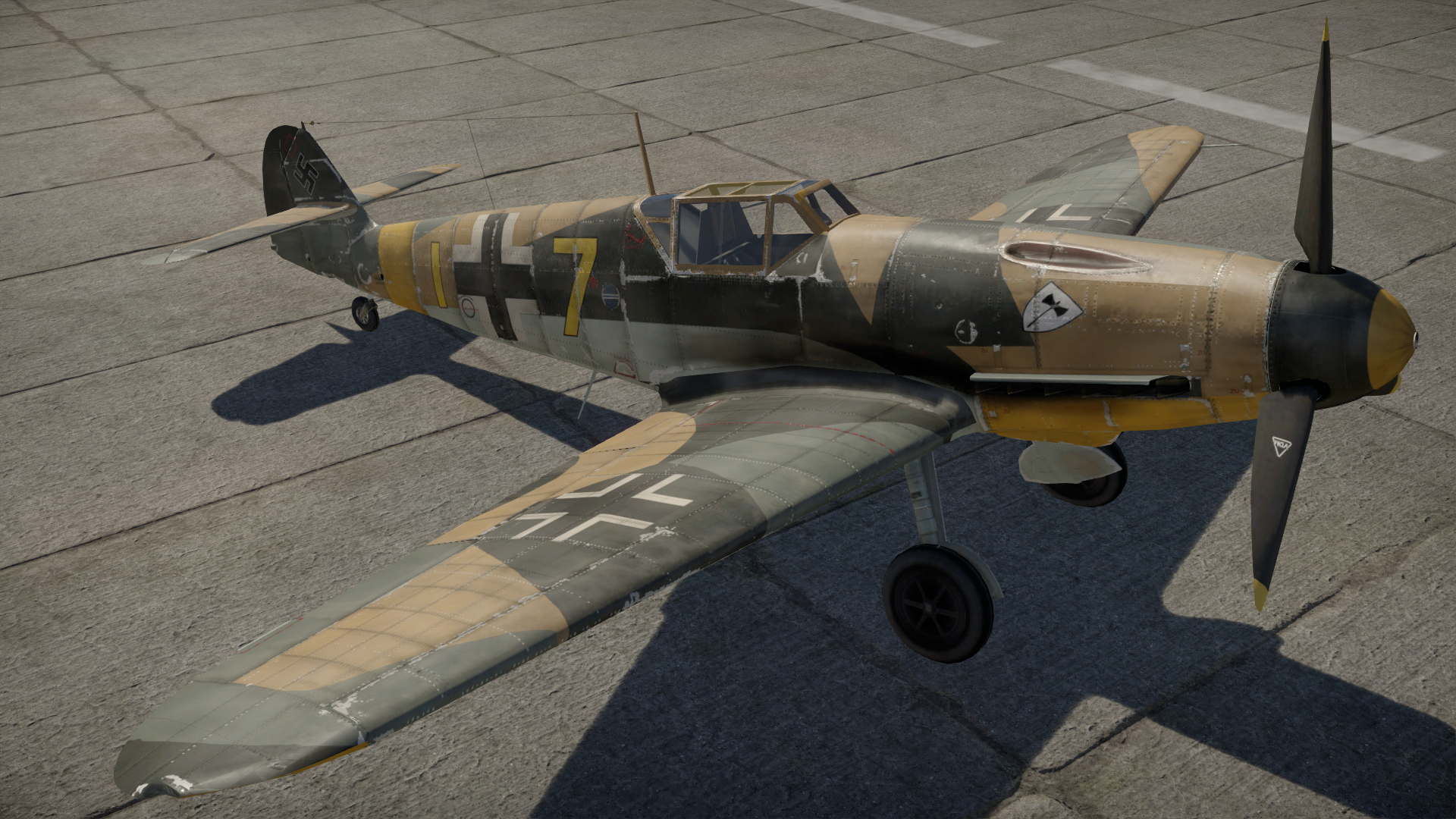
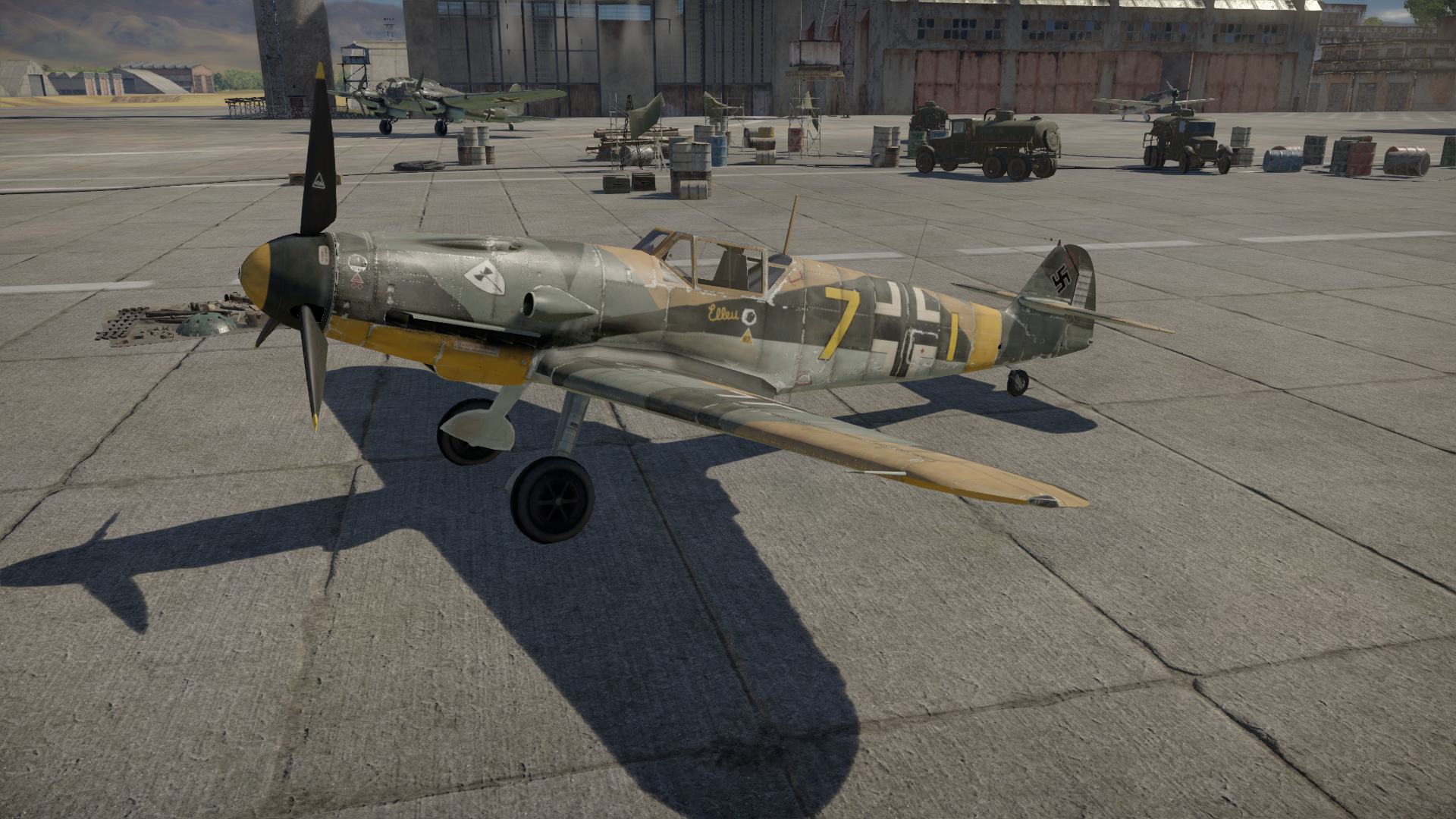
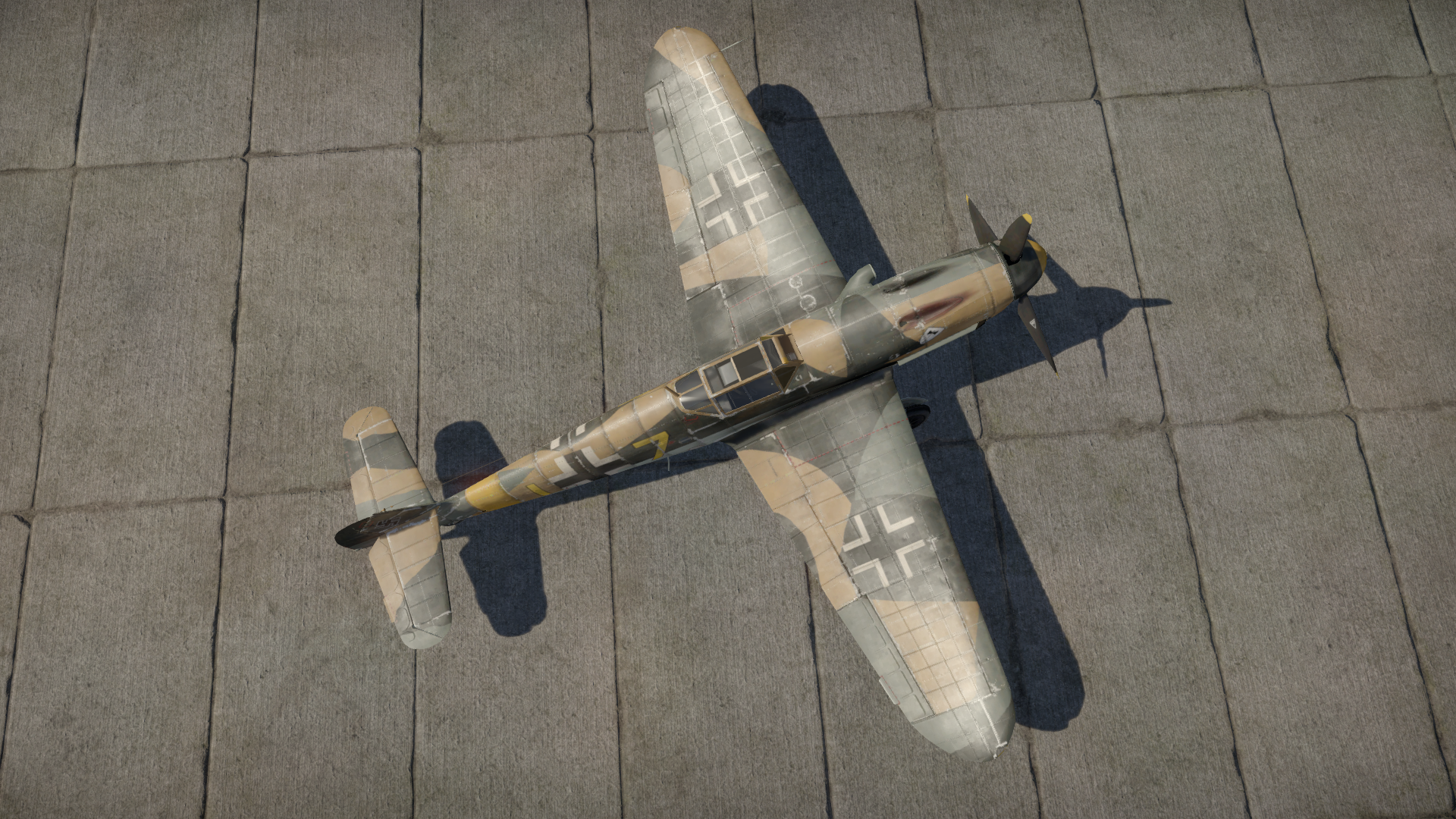
Skin for Bf 109 F-4
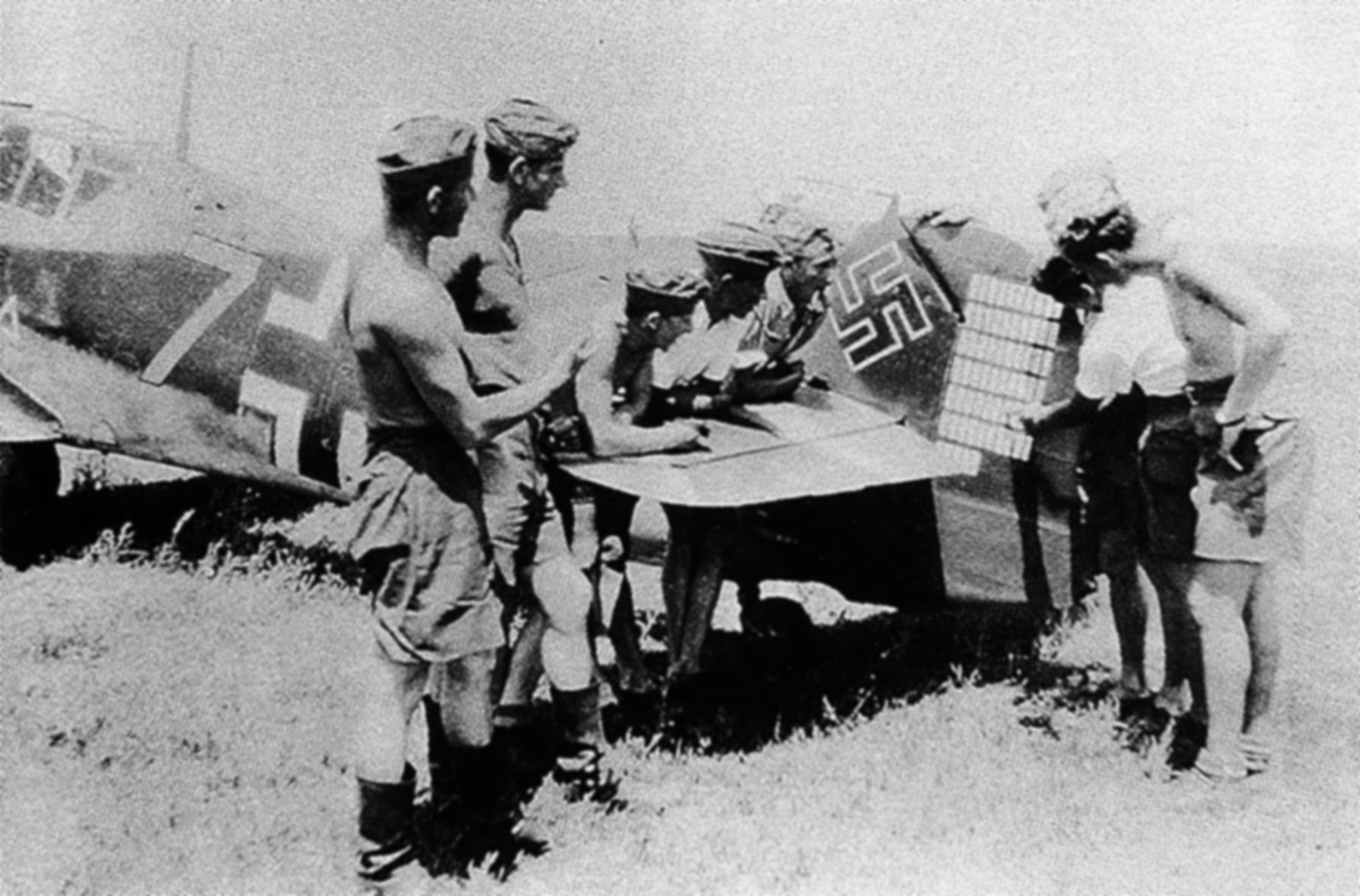
Bf 109F-4, W. Nr. 13325, flown by Oblt. Viktor Bauer, 9./JG 3, Shchigry, Soviet Union, June 1942
Viktor Bauer (15 September 1915 – 13 December 1969) was a former Luftwaffe fighter ace and recipient of the Knight's Cross of the Iron Cross with Oak Leaves during World War II. A flying ace or fighter ace is a military aviator credited with shooting down five or more enemy aircraft during aerial combat. Bauer is credited with 106 aerial victories, achieved in over 400 combat missions, all but four claimed on the Eastern Front.
World War II in Europe had begun on Friday, 1 September 1939, when German forces invaded Poland. On 1 November, he received the Iron Cross 2nd Class (Eisernes Kreuz 2. Klasse). On 1 March 1940, he was transferred to the 2./Jagdgeschwader 77 (JG 77–77th Fighter Wing). Bauer claimed his first aerial victory on 15 May 1940 west of Bruges, a Royal Air Force (RAF) Hawker Hurricane. He shot down another Hurricane near Cambrai on 18 May. Bauer was promoted to Oberleutnant (first lieutenant) on 1 June 1940 and was awarded the Iron Cross 1st Class (Eisernes Kreuz 1. Klasse) on 18 November 1940. He then fought in the Battle of Britain against the RAF, claiming a Supermarine Spitfire shot down on 1 November 1940. Bauer was awarded the Iron Cross 1st Class (Eisernes Kreuz 1. Klasse) on 18 November 1940, and then transferred to Jagdgeschwader 3 (JG 3–3rd Fighter Wing) in December 1940. On 10 June 1941, Bauer was appointed Staffelkapitän (squadron leader) of 9. Staffel (9th squadron) of JG 3, succeeding Oberleutnant Max Jaczak who killed in a flying accident the day before.
Eastern Front
In preparation for the German invasion of the Soviet Union, Operation Barbarossa, he and his JG 3 were transferred to the Eastern Front. In June 1941, he claimed 15 Soviet aircraft shot down, including five SB-2 twin-engine bombers claimed on 26 June alone. He then claimed 17 victories in July, including five Russian DB-3 twin-engine bombers on 12 July.
On 23 July 1941, Bauer claimed two Polikarpov I-153 biplane fighters shot down, taking his to total to 36 aerial victories. That afternoon, his Messerschmitt Bf 109 F-2 (Werknummer 8987—factory number) sustained heavy damage in combat with a flight of Ilyushin DB-3 bombers at the Dnieper. Bauer attempted a forced landing at Bila Tserkva, the aircraft somersaulted, resulting in heavy injuries to Bauer. During his convalescence, he was awarded the Knight's Cross of the Iron Cross (Ritterkreuz des Eisernes Kreuzes) on 30 July 1941 for 34 aerial victories. During his absence, Leutnant Helmut Mertens served as acting Staffelkapitän of 9. Staffel. Bauer returned to his unit in February 1942.
At the time of his return to front line service, III. Gruppe of JG 3 had been redeployed to an area of operations north of Lake Ilmen in support of the airlift resupplying German forces in the Demyansk Pocket. There, on 18 February 1942, Bauer claimed two Mikoyan-Gurevich MiG-3 fighter aircraft, taking his total to 40 aerial victories. In combat with 6 Udarnaya Aviatsionnaya Gruppa (6 UAG—6th Soviet Strike Aviation Group) on 4 April, he claimed his 50th aerial victory, a Lavochkin-Gorbunov-Gudkov LaGG-3 fighter. On 19 May, Bauer claimed a 429 Istrebitel'nyy Aviatsionyy Polk (429 IAP—429th Fighter Aviation Regiment) MiG-3. On 22 June 1942, Bauer was awarded the Honorary Cup of the Luftwaffe (Ehrenpokal der Luftwaffe).
One year later on 26 July 1942, he received the Knight's Cross of the Iron Cross with Oak Leaves (Ritterkreuz des Eisernes Kreuzes mit Eichenlaub) for 102 aerial victories. He was the 14th Luftwaffe pilot to achieve the century mark. Bauer and together with Oberleutnant Erwin Clausen were presented the Oak Leaves by Adolf Hitler at the Führerhauptquartier at Rastenburg.
On 9 August, he claimed his 106th victory. On 10 August 1942, Bauer force landed his Bf 109 F-4 (Werknummer 13241—factory number) at Nowy-Kalach. His aircraft had been damaged by enemy return fire and Bauer was again wounded, forcing him to surrender command of 9. Staffel to Leutnant Rolf Diergardt. On 1 September 1942, he was promoted to Hauptmann (captain).
Training commands
On recovery, Bauer was put in command of Ergänzungs-Jagdgruppe Ost (Supplementary Fighter Group, East) in southern France on 9 August 1943. In this command position, he was promoted to Major (major) on 1 May 1944. Promoted to Oberstleutnant (lieutenant colonel) and later to Oberst (colonel), Bauer was appointed Geschwaderkommodore (wing commander) of Ergänzungs-Jagdgeschwader 1 (EJG 1–1st Supplementary Fighter Wing) until the end of hostilities in May 1945. He was taken prisoner of war and released in July 1945.
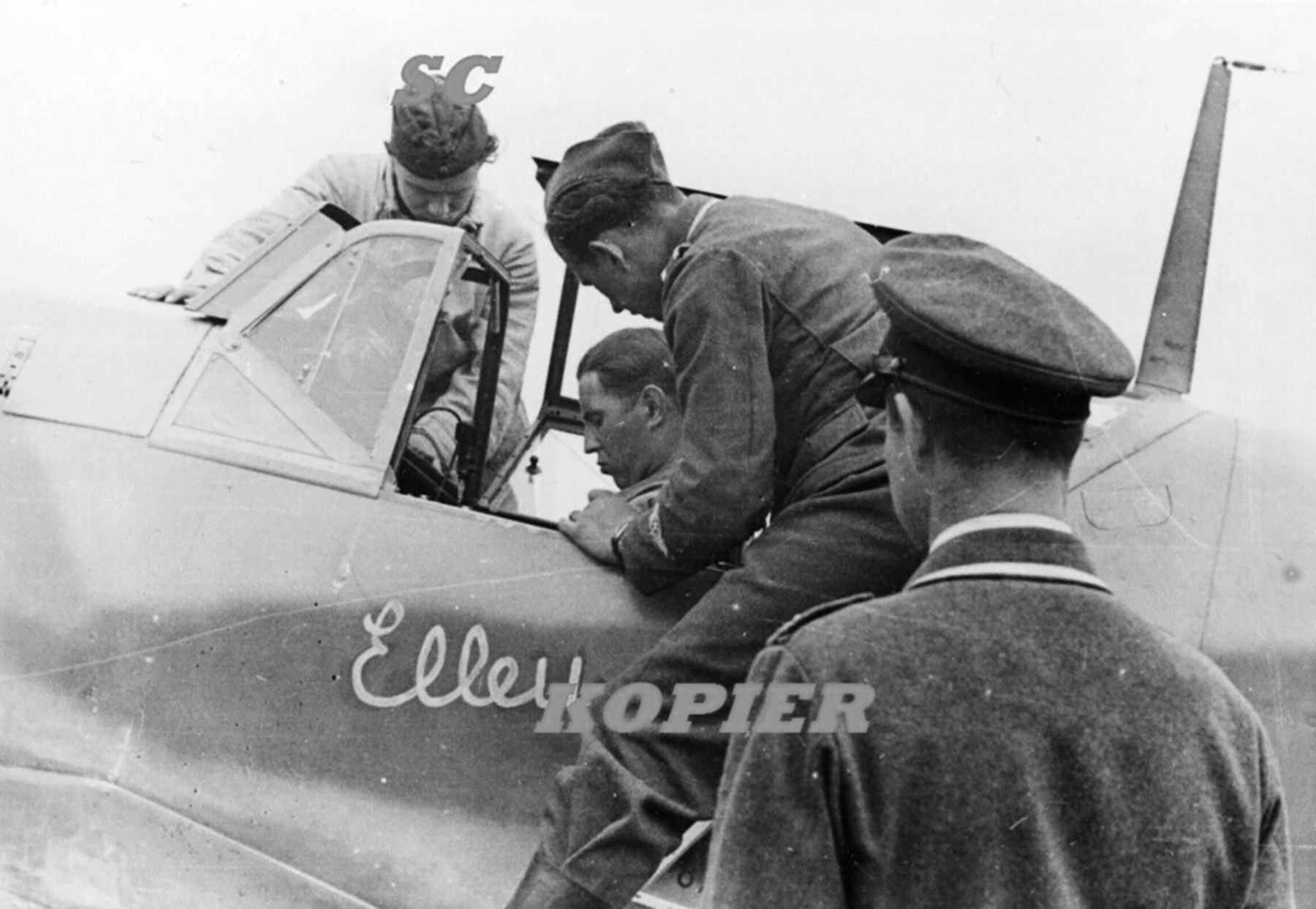
This aircraft was flown by Viktor Bauer, a fighter ace credited with 106 kills and a Ritterkreuz holder. He scored mostly against Soviet pilots. He flew this particular aircraft in the summer of 1942, when German Group of Armies A advanced on Stalingrad. This unit received Messerschmitts originally intended for service in North Africa, and thus was camouflaged in RLM 78/79. The segments of RLM 74/70 (some sources say RLM 75/71) were added to the desert camouflage scheme. This made the aircraft less visible in the Eastern Front environment. The yellow wingtips, fuselage band and lower cowling were typical for airplanes flown in the east. Note the III./JG 3 badge on the nose. The female name Ellen referred to Bauer´s wife. Bauer achieved his 106th and last kill on August 9, 1942 northwest of Stalingrad. The very next day he was hit by enemy fire, wounded and had to belly land his crippled plane. After rescue, Bauer served in various posts of Ergänzungs (replacement) units.