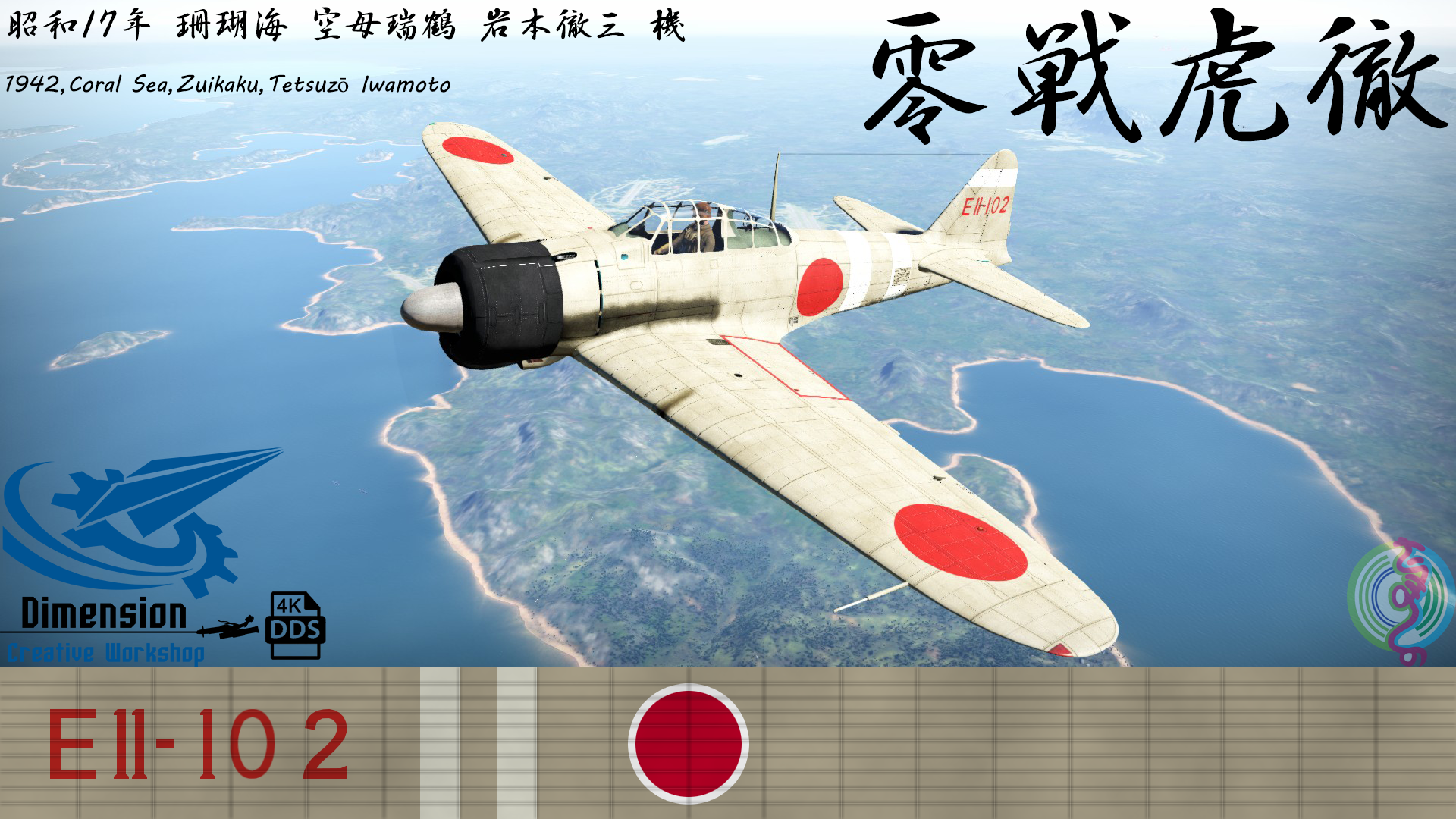
1942,Coral Sea,Zuikaku,Tetsuzō Iwamoto #a6m2 #a6m2b #zero #4kdds #historicalace
1942,Coral Sea,Zuikaku,Tetsuzō Iwamoto #a6m2 #a6m2b #zero #4kdds #historicalace
昭和17年 珊瑚海 空母瑞鶴 岩本徹三 機
Credits to Ayy_Lmao for his template
Tetsuzō Iwamoto
Lieutenant Junior Grade Tetsuzō Iwamoto (岩本 徹三 Iwamoto Tetsuzō?) was one of the top scoring aces among Imperial Japanese Navy Air Force (IJNAF) fighter pilots.[1] He entered the Imperial Navy in 1934 and completed pilot training in December 1936. His first combat occurred over China in early 1938. He emerged as the top naval ace of the campaign, credited with 14 aerial victories. Subsequently he flew Zeros from the aircraft carrier Zuikaku from December 1941 to May 1942, including at the Battle of the Coral Sea.
In late 1943, Iwamoto's air group was sent to Rabaul, New Britain, resulting in three months of the hardest air combat ever undertaken by the Imperial Japanese Navy Air Force against air raids mounted by U.S. and Allied air units.[2][3]
Subsequent assignments were Truk Atoll in the Carolines and the Philippines, being commissioned an ensign in October 1944. Following the evacuation of the Philippines, Iwamoto served in home defense and trained kamikaze pilots.
Like many Japanese veterans, Iwamoto was reported to have fallen into depression after the war. His diary was found after his death, with claims of 202 Allied aircraft destroyed.
As a result of the Japanese use of the British naval practices, the IJNAF scoring system was based on the system the Royal Navy and the Royal Air Force (RAF) adopted from World War I until World War II. This system differed from the scoring system used by the U.S. Navy Air Force and U.S. Marine Air Force during World War II. Dr. Izawa and Professor Hata estimated the figure at about 80 or more than 87 in their research work in January 1971. In December 1993 Izawa wrote that Iwamoto was virtually the top ace of the IJNAF, .[4]
As of mid-1944, there remained only two IJNAF fighter pilots who were credited with over 100 victories. Depending on various totals cited, Tetsuzō Iwamoto or Hiroyoshi Nishizawa was Japan's best ace. Iwamoto was known as the Chūtai leader (Flying Company, Squadron of 8 to 16 fighters). Iwamoto was one of few survivors of the IJNAF from the early part of the second world war. He fought over the Indian and the Pacific Ocean from north to south, and trained his young pilots even in the last months of the war.[5]